
MDF vs Plywood Cabinets: Which Material Is Best?
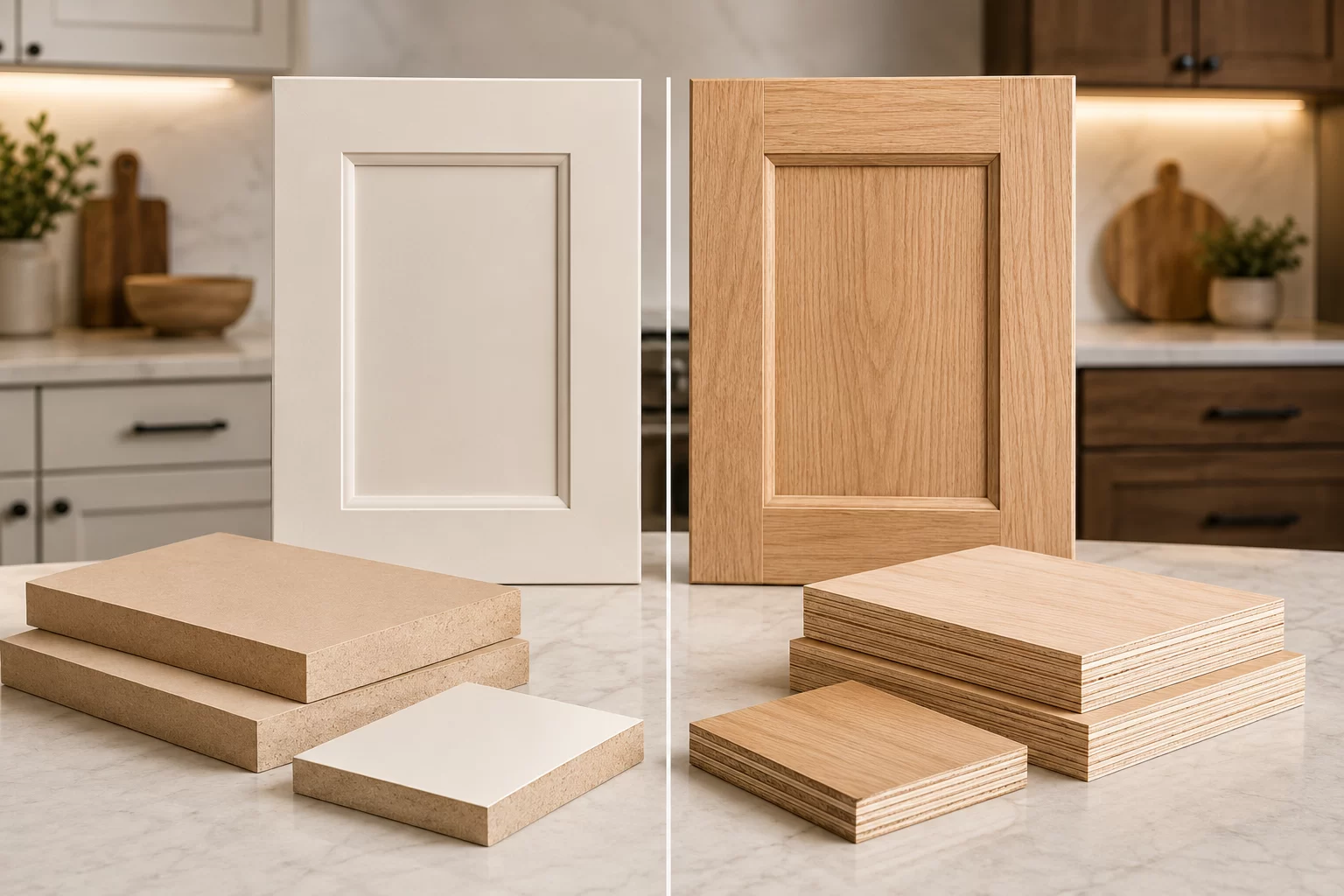
When planning a custom cabinetry project, one of the most important decisions homeowners make is selecting the right cabinet materials. The materials used during manufacturing affect durability, appearance, moisture resistance, maintenance requirements, and overall project cost.
Two of the most common materials used in modern cabinet construction are MDF (Medium Density Fibreboard) and plywood. Both materials have strengths and are widely used throughout the cabinetry industry, but they perform differently depending on the application.
At True North Cabinetry, material selection is an important part of the design process. Understanding the advantages of MDF and plywood can help homeowners make informed decisions about their custom cabinetry project.
Why Cabinet Material Selection Matters
Cabinets are one of the hardest-working features in any home.
Kitchen cabinets, bathroom vanities, laundry room storage, and built-ins are used daily and must withstand years of opening, closing, cleaning, and general wear.
Choosing the right material can influence:
- Durability
- Moisture resistance
- Finish quality
- Long-term performance
- Project budget
- Overall appearance
The best material is not always the most expensive option. Instead, it depends on how the cabinetry will be used and the desired finished look.
What Is MDF?
MDF stands for Medium Density Fibreboard.
It is an engineered wood product manufactured from wood fibres, waxes, and resins that are compressed under heat and pressure to create a dense, uniform panel.
Unlike natural wood products, MDF has a consistent structure throughout the material.
This consistency provides several advantages for cabinetry applications.
Advantages of MDF Cabinets
Smooth Finish Quality
One of MDF’s biggest strengths is its exceptionally smooth surface.
Because MDF contains no wood grain, it produces a very clean painted finish.
This makes MDF a popular choice for:
- Painted cabinet doors
- Shaker-style cabinets
- Contemporary cabinetry
- Detailed door profiles
Homeowners seeking a smooth, modern painted finish often prefer MDF for visible cabinet components.
Consistent Material Structure
MDF does not contain knots, grain variations, or natural imperfections.
This creates predictable machining results and allows manufacturers to produce highly detailed door styles with excellent consistency.
Cost Effectiveness
MDF is generally more affordable than plywood.
For many projects, it provides an excellent balance between appearance and budget.
Potential Considerations for MDF
Like any material, MDF has limitations.
While modern MDF products perform well in many applications, prolonged exposure to moisture can affect the material if surfaces become damaged or improperly protected.
This is one reason professional manufacturing and finishing are important.
Proper sealing, finishing, and installation help maximize performance and longevity.
What Is Plywood?
Plywood is a manufactured wood panel made from multiple thin layers of wood veneer bonded together under pressure.
Each layer is oriented in alternating directions, creating a strong and stable panel.
Plywood has been used in cabinetry and construction for decades because of its durability and structural strength.
Advantages of Plywood Cabinets
Excellent Structural Strength
Plywood is known for its strength and stability.
The layered construction helps resist warping and provides excellent support for cabinet boxes and structural components.
Improved Moisture Resistance
While no wood product is completely waterproof, plywood generally performs better in environments where occasional moisture exposure may occur.
This makes it a popular choice for cabinet box construction in kitchens, bathrooms, and utility spaces.
Lightweight Strength
Plywood offers a strong strength-to-weight ratio.
Despite its durability, it is often lighter than comparable MDF components.
This can be beneficial during manufacturing and installation.
Potential Considerations for Plywood
One consideration with plywood is cost.
Because plywood is manufactured using multiple layers of real wood veneer, it is often more expensive than MDF.
The surface may also require additional preparation when a perfectly smooth painted finish is desired.
For this reason, many cabinetry projects utilize both plywood and MDF in different applications.
MDF vs Plywood: Side-by-Side Comparison
Finish Quality
MDF
- Extremely smooth surface
- Excellent for painted finishes
- Ideal for decorative door profiles
Plywood
- Natural wood characteristics
- Suitable for stained or wood-look applications
- May require additional preparation for paint
Durability
MDF
- Strong and stable when properly finished
- Performs well for doors and decorative components
Plywood
- Excellent structural strength
- Ideal for cabinet boxes and high-use applications
Moisture Resistance
MDF
- Performs best when properly sealed and protected
Plywood
- Generally offers better moisture resistance
Cost
MDF
- Typically more budget-friendly
Plywood
- Usually carries a higher material cost
Which Material Is Best for Kitchens?
The answer depends on the specific project.
Many custom cabinetry projects incorporate both materials strategically.
For example:
- MDF may be used for painted cabinet doors and drawer fronts.
- Plywood may be used for cabinet boxes and structural components.
Using each material where it performs best often delivers the ideal combination of appearance, durability, and value.
This is one reason custom cabinetry offers advantages over mass-produced products—materials can be selected based on the project’s specific needs.
Are MDF Cabinets Durable?
Yes.
One of the most common misconceptions is that MDF is a low-quality material.
In reality, quality MDF cabinetry can perform exceptionally well when properly designed, manufactured, finished, and installed.
Many premium painted kitchens utilize MDF doors because of the superior finish quality it provides.
The key is working with an experienced cabinet manufacturer that understands where and how each material should be used.
Why Material Selection Is Part of the Design Process
At True North Cabinetry, material selection is never a one-size-fits-all decision.
During the design and consultation process, we evaluate:
- Project goals
- Desired finishes
- Budget considerations
- Storage requirements
- Room conditions
- Long-term expectations
By understanding how the cabinetry will be used, we can recommend materials that provide the best combination of performance and value.
Choosing the Right Cabinet Materials for Your Project
Both MDF and plywood have important roles in modern cabinet construction.
Rather than focusing on which material is universally “better,” the goal should be selecting the right material for the right application.
At True North Cabinetry, we help homeowners understand the advantages of each option and create cabinetry solutions tailored to their needs.
Speak with the True North Cabinetry Team
If you’re planning a kitchen renovation or custom cabinetry project, contact True North Cabinetry today. We’ll help you compare cabinet materials, explore your options, and select the best solution for your home, budget, and design goals.